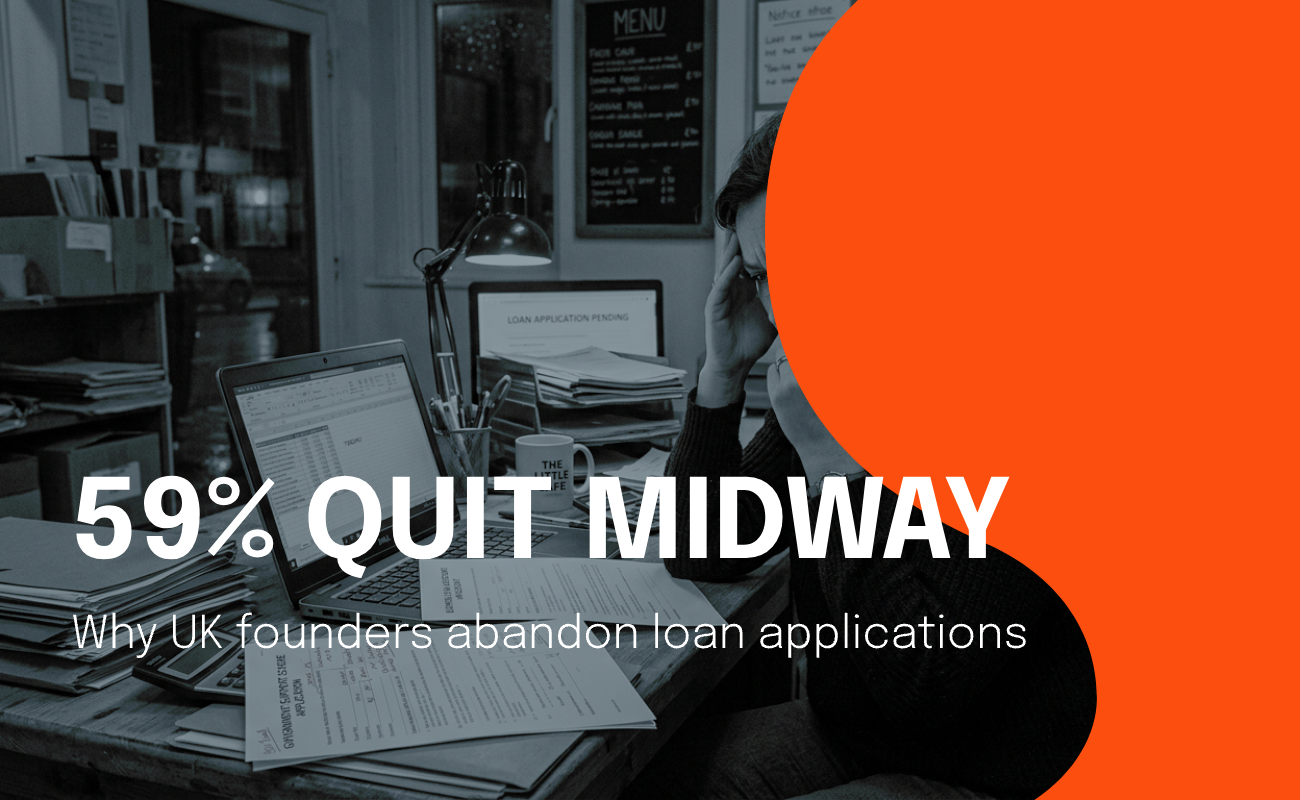


59% of UK founders quit loan applications midway, and here's why
If you've ever started a finance application and quietly closed the tab, you're in good company. Most small business owners don't get turned down for finance. They walk away from it.
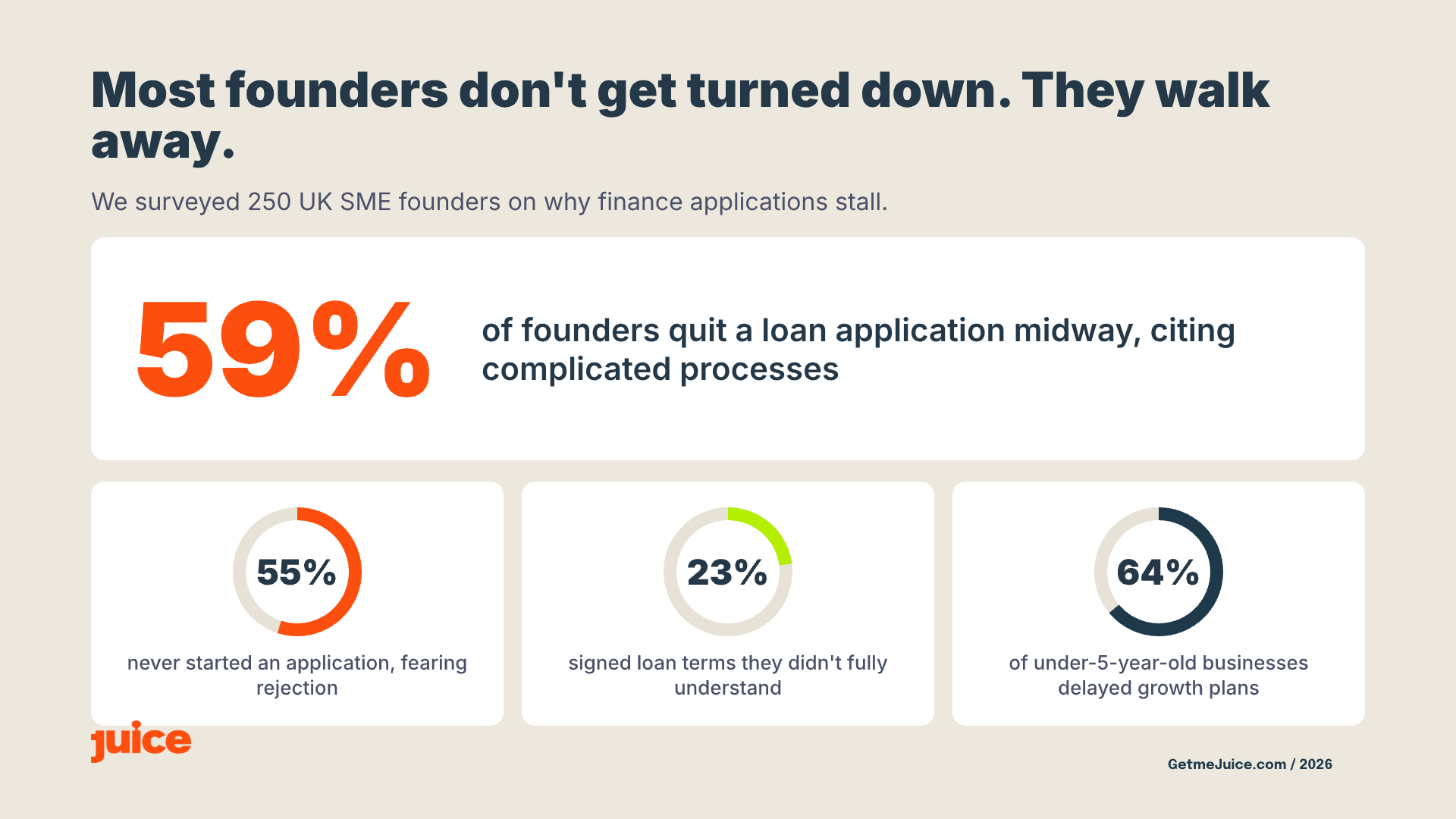
In our 2025 survey of 250 UK SME founders, 59% said they had abandoned a loan application partway through, citing complicated processes. Another 55% didn't even start one, put off by the fear of being rejected. The money was often there; the clarity wasn't.
What actually makes founders quit
- Complexity. Long forms, unfamiliar terms, and documents that assume you already speak the language of finance.
- Uncertainty about eligibility. Around 60% of those who declined to apply weren't sure they'd qualify or couldn't compare products easily, whether or not they were creditworthy.
- The emotional cost. Over half of founders associate borrowing with shame or failure, and 42% felt uncomfortable asking lenders "basic" questions.
Behavioural economists have a name for this, anticipatory rejection: pulling out early to avoid the perceived cost of asking.
Why it matters
This is more than a personal frustration. More than half of the founders we surveyed had delayed or cancelled growth plans for want of finance, rising to 64% for businesses under 5 years old. Multiply that across the country and you get the Bank of England's estimated £22 billion SME funding gap.
What good finance should feel like
The fix is plainer finance, not more paperwork. A revolving credit facility from Juice is designed to be understood: you draw what you need, repay as money comes back in, and see every cost before you commit. There's no jargon and nothing hidden.
See if Juice is right for your business → Funding is subject to status and lending criteria.
FAQ
Why do founders abandon loan applications? Mostly complexity and fear of rejection. 59% of UK founders we surveyed quit midway, citing complicated processes.
Is it normal to feel unsure about borrowing? Yes. Half of founders describe their approach as "cautious". The aim is clarity, so the decision is informed rather than fearful.