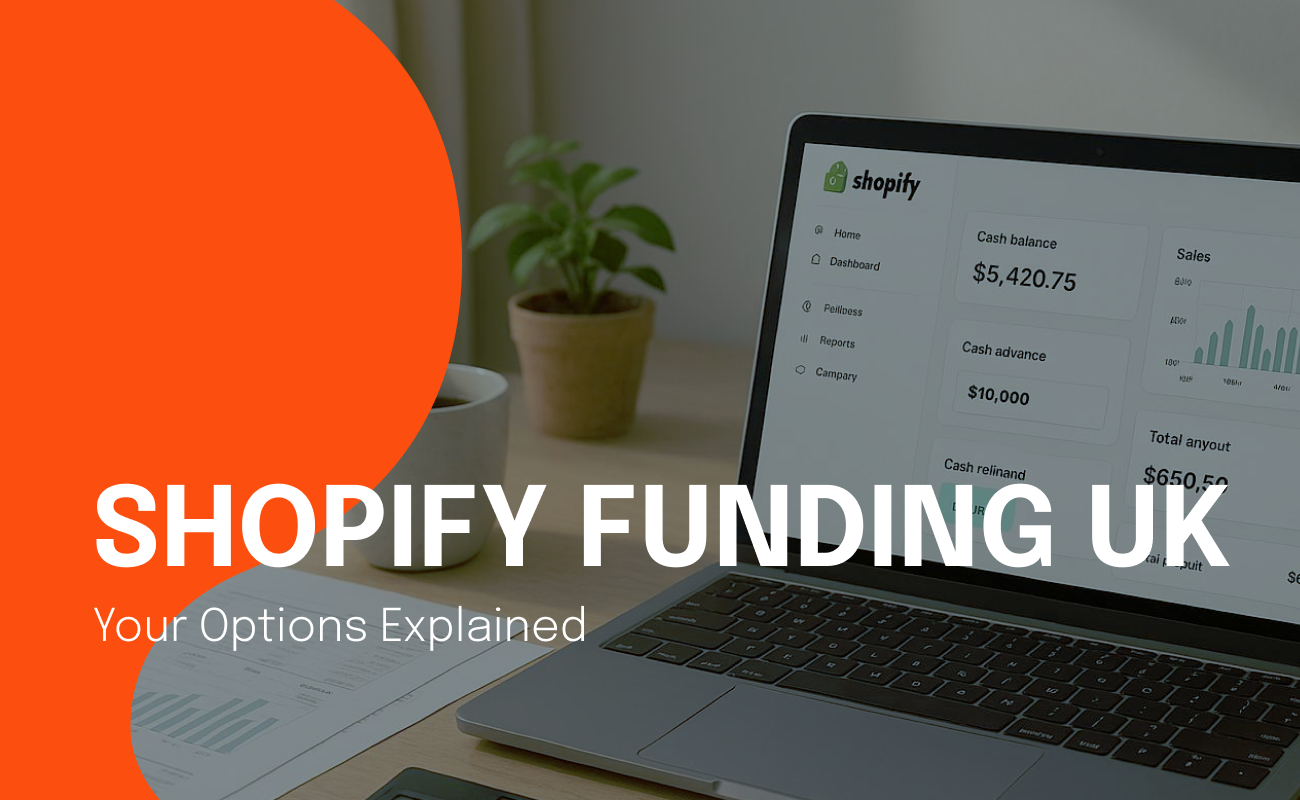
Shopify Capital Alternative: Why UK Merchants Choose Flexible Funding

Finance

Shopify merchants across the UK often see offers of fast cash on their dashboards. It looks straightforward. You receive a lump sum with quick approval designed to let you restock inventory or invest in customer acquisition. Many see it as a route to instant growth.

While platform-based funding offers rapid access to working capital, it can present limitations for growing small businesses. As UK e-commerce founders increase sales and diversify channels, financial needs change. Owners soon realise that true control over e-commerce funding requires more than just fast payouts. You need funding with clear terms, practical flexibility, and visibility over your costs.

Flexible business loans, for example, can fill a gap for small businesses looking for predictable repayments and transparency. As decision-makers who manage cash flow and plan ahead, you deserve access to funding structures that actually help scaling companies thrive.

This practical guide explains how flexible funding options compare to Shopify Capital and other merchant cash advances. It uses clear language and real scenarios for UK e-commerce business owners considering their next step.

Understanding Platform-Based E-commerce Funding Offers

Shopify Capital is a well-known example of merchant funding for e-commerce sellers. These offers typically appear directly in your store dashboard. They promise fast decisions and money within days. The repayments come directly from your card sales. The funding model is usually a merchant cash advance. Let’s look closer at how these arrangements work.

Lump sum advances

You receive a fixed amount upfront, such as £20,000 or £50,000. The lender subtracts a percentage of your future daily sales until you have repaid both the advance and an agreed fee. The process is simple, but you have little choice in how and when to draw funds. The costs are fixed at the start.

Fees and cost calculation

Many platform offers use a fixed fee or a factor rate. For example, you pay back £25,000 after receiving £20,000. This looks straightforward, but if you repay early, the effective annual rate increases. There is no reduction in cost if you settle ahead of schedule.

Tied to platform performance

Repayments are linked to your sales through Shopify or another platform. If your sales fall, repayments slow. However, if you sell more, you end up paying much faster. There is rarely scope to adjust terms along the way.

Platform-based funding suits some business owners seeking fast e-commerce loans with no paperwork. Yet, as your strategy matures, these models may restrict flexibility. Multi-channel expansion and seasonality demand more tailored lending solutions for UK e-commerce businesses.

Key Limitations for Scaling E-commerce and Online Shops

Many UK online store owners outgrow the structure of traditional merchant cash advances. Here are some issues to consider.

- Inflexible drawdowns: You must take all funds upfront, regardless of when you actually need additional working capital.

- High total cost: Early repayment does not bring savings. Short sales spikes can dramatically raise your annualised borrowing cost.

- One-dimensional approval: Platform lenders only review your data with them. If you trade across Amazon, eBay, TikTok Shop, and B2B, you may be underfunded.

E-commerce retailers planning major inventory investments ahead of busy periods, or managing multi-channel sales and delayed payments, need a flexible alternative. Predictable online retail funding gives you more levers to control cost and cash flow.

What E-commerce Merchants Need from Business Funding

E-commerce funding for scaling businesses is about fit, not speed. You need options that promote transparency and support real UK business needs.

Transparent pricing structures

Small businesses succeed on clarity and planning. Seek online business loans that show interest as a percentage per month or per year. Avoid arrangements where true costs are hidden behind factor rates. Calculate how funding impacts your margin in real terms before you decide.

Flexible drawdown and repayment options

A rolling credit facility or flexible business line of credit lets you draw what you need, when you need it. You might need extra funds in September for stock purchases, then again in early December for rapid shipping. These SME funding options require fewer applications and give you cash on hand for timely action.

Early repayment freedom

Look for funding solutions with fully predictable repayments. Choose partners who support early settlement with no penalty. This protects your margins during bumper months and removes the risk of overpayment.

Full business view for approval

Modern e-commerce business loans should consider your entire operation. This includes accounting data, bank transactions, and all your channel sales, not just Shopify. Underwriting with a complete business view often secures a higher funding limit and more suitable terms.

Comparing Shopify Capital and Flexible Funding Alternatives

Juice Flex and similar providers have reshaped how small companies manage capital for growth. Flexible e-commerce finance adapts as the business changes. Dedicated partners offer several advantages over platform-based options.

Flexible credit lines to match business cycles

Instead of a single lump sum, a revolving credit facility provides a set limit, for example £100,000, with the flexibility to draw funds as needed. You can use £15,000 for inventory before a seasonal peak, then £10,000 for a new digital campaign. Interest only applies to funds in use, helping align costs with trading activity. For more on this, read our Revolving Loan Facility Explained guide.

When comparing a revolving credit facility to a traditional term loan, avoid making assumptions about which is best. For a side-by-side breakdown, including use cases and structure, our article Term Loan vs Revolving Credit – Which Suits Your Business? details the key differences. These resources provide a clear overview so you can choose the option that fits your strategy.

Multi-channel funding for online retailers

If your business sells across multiple platforms, work with lenders who review your performance across the full business footprint. This often results in better funding limits and terms by recognising all sources of revenue.

Repayment flexibility tied to cash flow

A flexible facility allows you to repay balances early or in part, then access the same credit again as needed. You pay for what you use, when you use it, and are free to settle up after busy sales periods with no extra cost. For practical details, refer to our Revolving Loan Facility Explained.

Inventory, Marketing, and Seasonal Funding Needs

E-commerce funding works best when it matches the specific needs of your business. Founders often turn to flexible facilities for inventory purchases, digital marketing investment and to manage peak season demand. Here are practical actions you can take.

Inventory finance for online shops

Retailers frequently cover supplier invoices months before stock is sold. This challenges cash flow and can slow future growth. The right capital structure supports you at the key moments:

  • Draw funds for a supplier deposit when needed, rather than relying on a full lump sum upfront.
  • Use additional drawdowns as goods clear customs.
  • Repay using sales receipts after stock moves.

For a deeper look at how external funding can drive long-term profitability and support inventory cycles, see Turning Borrowed Capital into Lasting Growth.

Digital marketing finance

Access to working capital means you can respond quickly to performance data. When a paid campaign performs well, expand your budget immediately and fund the extra outlay with a flexible draw. If campaign performance drops, repay what you have used and limit total interest.

Our article Term Loan vs Revolving Credit compares common funding structures for marketing and how each helps you respond to real-time opportunities.

Peak season and seasonal funding

Retailers with seasonal peaks—like Black Friday or Christmas—reach cash flow pinch points before orders arrive. Delaying funding or self-funding those periods can restrict stock and cap your upside.

  • Draw for stock and shipping in the lead-up to busy trading.
  • Schedule repayments according to customer cash flow.
  • Use providers with no early repayment penalties to reduce costs if sales come in ahead of plan.

Explore why self-funding your peak periods could be limiting growth in Is Bootstrapping Your Peak Season Killing Your Growth.

Using insight to guide fund deployment

Choose facilities that give you a dashboard or reporting tool. These help you:

  • Identify which sales channels and products deliver the strongest profit.
  • Spot slow-moving lines that may not warrant additional funding.
  • Monitor the true cost of funding against your gross margins.

Campaign and channel performance data should sit alongside cash flow forecasts. This combination helps you decide not just when to fund, but also what to fund next.

You may be ready for flexible e-commerce funding if any of these situations apply:

Scenario 1: Preparing for Q4 and peak season

A fashion retailer expects to do 40% of their sales in November and December. Standard platform funding is costly or restrictive because repayments scale with order surge, and cannot be timed to suit stock cycles. A flexible alternative allows you to draw and settle multiple times, making the most of the season and protecting profit.

Scenario 2: Expanding with thin margins

An electronics SME relies on volume but earns slim unit profit. High up-front fixed fees eat away the entire return when using merchant cash advances. Opting for interest-based business funding lets you model margin impact and borrow only when it improves profit.

Scenario 3: Diversifying channels and B2B sales

An online beauty retailer operates a Shopify site while expanding into wholesale with major UK chemists. Traditional platform finance is based on digital revenue history. Flexible lenders can see the entire trading book, approve based on the blended sales model and support working capital needs across B2B and B2C.

How to Assess E-commerce Funding Providers

Making the right choice for your UK online business can improve stability and fuel sustainable growth. Ask these questions:

- Is the pricing fully transparent? Can you see the cost per month and year?

- Do you have choice in when and how much to draw?

- Does the funding support multi-channel and real-world business models, including brick-and-mortar, B2B, and e-commerce?

- Are there early repayment options, with no fees or penalties?

- Will you receive data and profitability insights as standard, not just as a sales pitch?

- Can you plan future cash flow with the tools provided?

These questions help avoid hidden costs and funding that limits rather than supports growth.

Take Control of Your E-commerce Business Funding

UK e-commerce is maturing quickly. Gone are the days of growth at any cost. Today’s small business owners expect loan flexibility, transparent pricing, and practical tools to manage funding and cash flow.

Flexible lenders put decision-makers back in control. They allow growing brands to keep costs low, draw funds at the right time, and respond to market changes and multi-channel opportunities. With profitability insights and online dashboards, SMEs can fund what works and avoid risk.

You always want funding that flows with your business. Instead of accepting the first platform offer you see, review all your e-commerce finance options. Use the guidance above to ask critical questions and choose a partner that supports your growth on your terms.

Discover how flexible funding can support your business goals. Check your eligibility in 2 minutes

Marketing
Podcast
Beyond the Buzz: Strategic Moves Post Black Friday Cyber Monday
Welcome back to our series on mastering Black Friday Cyber Monday (BFCM) for your eCommerce business. In this crucial second instalment, we'll delve deep into
Read More
Marketing
Unleashing Creativity: Diverse Campaign Ideas for Black Friday Cyber Monday 2025
Welcome back to our series on mastering Black Friday Cyber Monday (BFCM) for your eCommerce business. In this crucial second instalment, we'll delve deep into
Read More
Growth hub
What a debut! Paul Brown as our first speaker for The Growth Hub
Paul Brown, founder of BOL Foods, launched Juice’s Growth Hub with an inspiring talk on his entrepreneurial journey, sharing candid insights from his time at Innocent Drinks to leading BOL in the plant-based food industry.
Read More
Finance
Revolving Credit Facility UK: Complete Guide for SMEs
Navigating cash flow challenges is part of every founder's journey, but with a revolving credit facility, you gain the flexibility to adapt without sacrificing control. This smart, non-dilutive funding option ensures you always have access to the capital you need to keep your business thriving.
Read More
Breakfast with Juice
Kicking Off Breakfast with Juice
The first Breakfast with Juice connected e-commerce founders for a relaxed, insightful discussion on growth challenges, showing the power of community support.
Read More
Press Releases
Juice CEO Katherine Chan Shares Her Vision with TechRound
Empowering E-commerce Founders: Juice CEO Katherine Chan Shares Her Vision with TechRound
Read More

For Fresh Perspectives And Updates Sign-Up To Our Mailing List.

Get the latest juicy news and updates on our Growth Hub and beyond!
Thank you! You are now subscribed to fresh and Juicy content!
Oops! Something went wrong while submitting the form.